
How Long After a Car Accident Do Symptoms Appear? (Why Most People Wait Too Long)
You walk away from the accident feeling fine.
No broken bones. No bleeding. Maybe just a little shaken. You tell yourself you got lucky. But later that night, something changes. Your neck tightens. Your lower back feels stiff. A dull headache creeps in. By the next morning, you’re wondering: “Was I actually injured?” Most car accident injuries are not felt immediately.
And that’s exactly where people make their first mistake.
Table of Contents
Why symptoms don’t appear right away
How long it actually takes for symptoms to show
What’s happening inside your body after a crash
Common delayed symptoms to watch for
What to do next
When to seek care in Andover and Merrimack Valley
Why Symptoms Don’t Appear Right Away
After a car accident, your body enters a high-adrenaline state.
Adrenaline is powerful. It suppresses pain. It sharpens focus. It helps you function in a stressful moment.
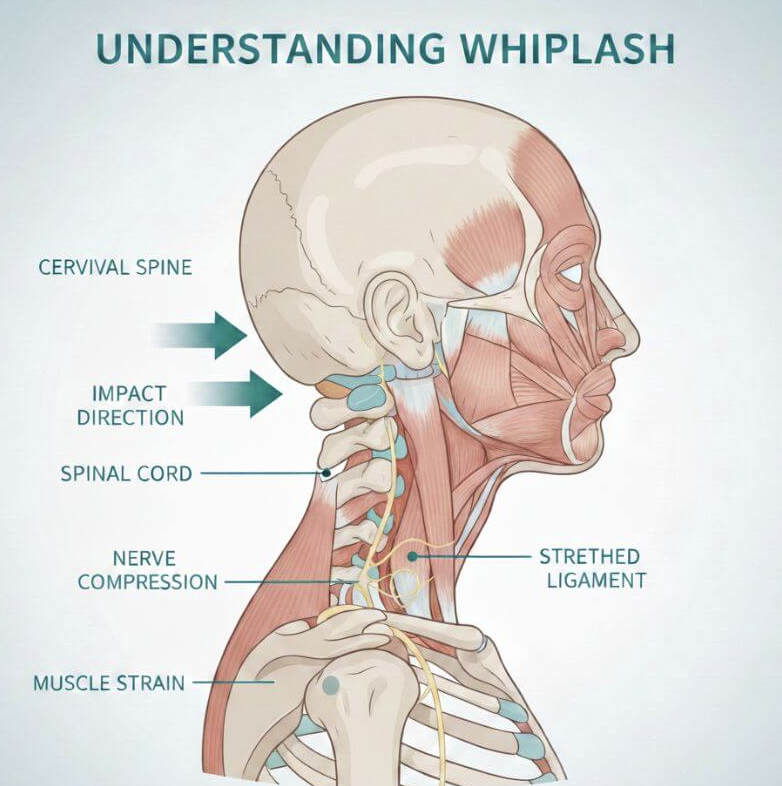
But it also masks injury.
At the same time, inflammation- the body’s natural healing response - takes time to build. Soft tissue damage, ligament strain, and joint irritation don’t always trigger immediate pain.
Instead, they develop over:
Hours
Days
Sometimes even a week or more
This is why patients in Andover, Lawrence, and Methuen often say the same thing:
“I felt fine at first… then everything hit me later.”
What’s Actually Happening Inside Your Body
Even in what seems like a “minor” crash - like a rear-end collision on Route 93 or a sudden stop near Route 495 - your body absorbs significant force.
Your spine, muscles, and ligaments are forced into rapid motion.
This can cause:
Microtears in soft tissue
Joint irritation
Ligament strain (especially in the neck)
Nervous system disruption
These injuries don’t always create immediate pain signals.
Pain is often the last thing to show up - not the first.
How Long After a Car Accident Do Symptoms Appear?
Most symptoms appear within 24-72 hours, but they can take longer depending on the injury.
Typical timeline:
Immediately: adrenaline masks pain
6-24 hours: stiffness, soreness begin
24-72 hours: peak inflammation and pain
3-7 days: more serious symptoms may emerge
In some cases, symptoms like nerve irritation or disc injury may take weeks to fully present.
Common Delayed Symptoms to Watch For
After a car accident, pay close attention to:
Neck pain or stiffness (whiplash)
Lower back pain
Headaches
Dizziness
Shoulder pain
Tingling or numbness
Reduced range of motion
Waiting too long is one of the biggest mistakes patients make.
These symptoms often worsen when left untreated.
Common Mistakes After a Car Accident
Most people don’t ignore their injuries on purpose -they just don’t realize what’s happening.
Here are the biggest mistakes:
Assuming “no pain = no injury”
Waiting days or weeks before getting checked
Only going to the ER and not following up
Ignoring stiffness or mild discomfort
Trying to “wait it out”
This is where problems start to become chronic.
What Should You Do After a Car Accident?
If you’ve been in a car accident, even a minor one, here’s what you should do:
Get evaluated as soon as possible
Monitor your symptoms closely over the first 72 hours
Avoid assuming symptoms will resolve on their own
Document any pain, stiffness, or functional limitations
Seek care from a provider experienced in car accident injuries
If you’re unsure where to start, reviewing your options for car accident treatment can help guide your next steps.
Why Early Evaluation Matters
At Andover Injury Center, we routinely see patients who waited too long.
What could have been:
A mild soft tissue injury
Turns into:
Chronic pain
Reduced mobility
Long-term dysfunction
Early diagnosis changes everything.
The sooner an injury is identified, the easier it is to treat properly.
How We Approach Car Accident Injuries Differently
Not all providers evaluate car accident injuries the same way.

At AIC, we focus on:
Detailed clinical examination
Movement and functional assessment
Identifying hidden soft tissue and joint injuries
Understanding the mechanism of injury
This allows us to create a precise, individualized plan - not a generic one.
If you’re exploring chiropractor after a car accident options, it’s important to choose someone who understands these nuances.
Local Care Matters
We regularly treat patients from:
Andover
Lawrence
Methuen
Lowell
North Andover
And many who commute through high-traffic areas like Route 93 and Route 495.
These types of accidents, especially rear-end collisions, are the most likely to produce delayed symptoms.
We care for patients we see from across the Merrimack Valley, many of whom initially believed they weren’t injured.
When Should You Get Checked?
If you’ve been in an accident, you should be evaluated:
Within 24-72 hours
Even if symptoms are mild
Especially if symptoms are increasing
You don’t need to wait for severe pain.
You just need to be proactive.
What to Do Next
If you’ve recently been in a car accident and aren’t sure what you’re feeling, or what to do next, the most important step is clarity.
At Andover Injury Center, we focus on identifying exactly what’s going on so you can make informed decisions about your health.
You don’t need to guess. You don’t need to wait.
You just need the right evaluation. If you’ve recently been in a car accident and aren’t sure what you’re experiencing, the most important step is getting a proper evaluation.
You can request an evaluation here to understand exactly what’s going on and what to do next.
Espanol
Si tuvo un accidente de auto recientemente, es importante que reciba una evaluación médica lo antes posible. Los síntomas pueden aparecer días después y empeorar con el tiempo si no se tratan.